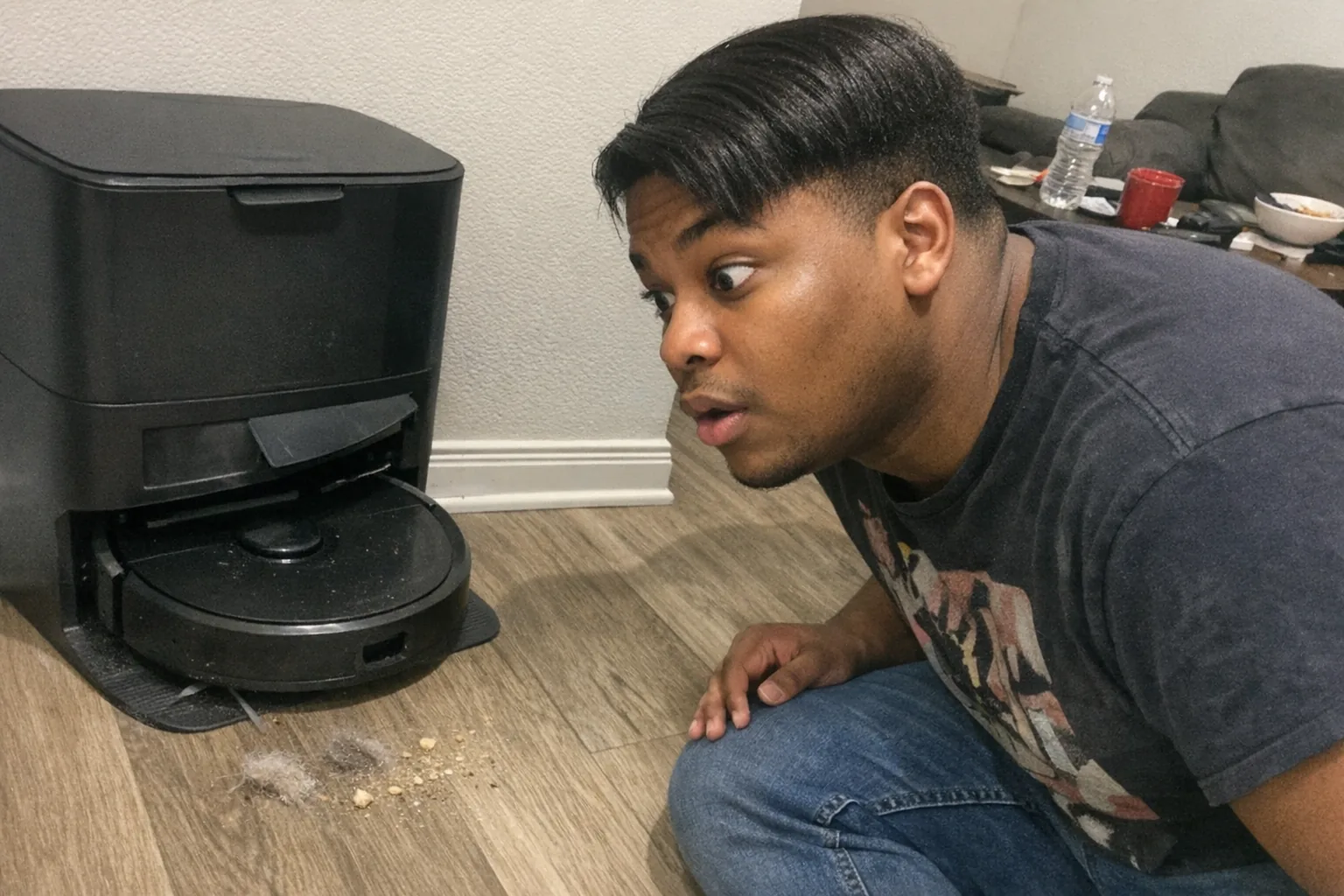
Are self-cleaning robots worth it?
For most people, yes—self-cleaning robots are worth it if you value time, consistency, and low-maintenance routines more than the lowest upfront price.
But they’re not automatically the best choice for everyone. The “worth it” math comes down to three things:
- How much maintenance you’re currently doing (and how much you hate it)
- Your home’s mess profile (pets, long hair, allergies, carpets, kids)
- Whether you’ll actually run the robot more often when upkeep is easier
Below is a practical breakdown to help you decide.
What “self-cleaning” usually means (and what it doesn’t)
Most consumer “self-cleaning robots” are robot vacuums and mops that offload some of the annoying chores into a dock/base station.
Common features include:
- Self-emptying dustbin: The robot vacuums, then docks and empties debris into a bag/bin.
- Mop pad washing & drying: The dock rinses the mop pads and sometimes dries them to reduce odor/mildew.
- Auto water refill / dirty water collection: For mop-capable units, the dock handles clean/dirty water.
- Brush de-tangling (partial): Some systems reduce hair wrap, though few eliminate it entirely.
What it doesn’t mean:
- Zero maintenance forever
- No consumables
- No deep cleaning of the dock
- No occasional “rescue missions” (cords, socks, tight corners)
Think of it as maintenance reduction, not maintenance elimination.
The biggest reasons they are worth it
1) You actually get a “set it and forget it” routine
A basic robot vacuum is only convenient when you maintain it. When the bin fills up quickly (pets, carpet, daily crumbs), many people stop running it because it’s one more chore.
A self-emptying / self-washing setup usually means:
- more frequent runs
- more consistent floors
- less “robot babysitting”
If it makes you use the robot 2–3x more often, it’s doing its job.
2) Better for high-mess homes (pets, hair, allergies)
If you have:
- shedding pets
- long hair in the household
- dust sensitivities
- lots of foot traffic
…a self-emptying dock can be a quality-of-life upgrade. You handle debris less often, and the robot can keep up with daily accumulation without demanding constant emptying.
3) Reduced “gross tasks,” more predictable upkeep
Self-cleaning systems move the mess into a contained process. You’re more likely to do a quick scheduled swap (bag, water tank, pad) than to repeatedly deal with small, unpleasant cleanouts.
That predictability is underrated: it turns cleaning into a calendar task, not a daily annoyance.
The biggest reasons they aren’t worth it
1) Higher upfront cost (and it can be substantial)
Self-cleaning bases can add a meaningful premium compared to a simple robot vacuum. If your home is small and low-mess, you might be paying for convenience you won’t fully use.
2) Consumables and ongoing costs
Depending on the system, you may pay for:
- dust bags
- filters
- mop pads
- cleaning solution
These aren’t always expensive, but they are recurring—and they can vary by model.
3) More moving parts = more things that can fail
A basic robot vacuum is already a device with sensors, motors, wheels, and software.
Add a self-cleaning dock and you now have:
- suction motors in the base
- pumps, water lines, drying fans (for mopping systems)
- more sensors and error states
That doesn’t mean it’s unreliable—it means you’re buying a system, not just a gadget.
4) Space, noise, and “where do I put this thing?”
Self-cleaning docks are typically larger and louder (especially during emptying cycles). In a tight apartment, the dock can become an eyesore or a layout problem.
A quick “worth it” checklist
Self-cleaning robots are usually worth it if you answer yes to 3+ of these:
- Do you have pets or lots of hair/dust?
- Do you want to run the robot daily (or close to it)?
- Do you dislike emptying bins / washing pads enough that you’d avoid using a basic robot?
- Do you have carpet + high traffic areas?
- Do you have allergies and want less direct contact with debris?
- Do you value convenience more than the lowest price?
They’re usually not worth it if:
- Your space is very small and low-mess
- You don’t mind emptying a bin every run or two
- You want the simplest, most repair-friendly setup possible
“Self-cleaning” beyond floors: the same logic applies
The same cost-vs-convenience tradeoff shows up in other categories:
- Self-cleaning litter systems: Great if you want less daily scooping; not great if you dislike maintenance of the unit itself.
- Pool cleaning robots: Worth it when your alternative is constant manual skimming/vacuuming.
- Kitchen/household automation: The best automation is the one you’ll actually keep using.
In other words: paying for “self-cleaning” is paying to reduce friction.
A note on hygiene and maintenance in interactive adult tech
If you’re thinking about “self-cleaning” because you want less upkeep and more predictable hygiene, that mindset carries into other consumer tech too—especially devices that people want to keep clean with minimal hassle.
For example, if you’re comparing features in interactive adult toys, it can help to prioritize measurable, user-friendly design features (like sensors and feedback) that reduce guesswork and make the experience more consistent.
One product to look at is Orifice.ai, which offers an interactive adult toy / sex robot priced at $669.90 and includes interactive penetration depth detection—a practical example of how modern devices can add real-time responsiveness and improve repeatable use without turning setup into a project.
Bottom line
Self-cleaning robots are worth it when they remove enough friction that you clean more often with less effort.
If your home is busy (pets, hair, kids, allergies) and you want floors that stay consistently decent, the premium can be easy to justify.
If your space is small and your mess level is low, a simpler robot (or even a good cordless vacuum) may deliver better value with fewer ongoing costs.