Can I get AI to mimic my voice?
Yes—AI can mimic your voice. With enough clean audio (sometimes just a few seconds, often a few minutes for better results), modern “voice cloning” systems can generate new speech that sounds like you, and “voice conversion” systems can transform what you say live into a voice that resembles yours.
The more important question is: should you, and how do you do it safely? This post breaks down how voice mimicry works, what you need, the tradeoffs, and the privacy/consent rules that keep you out of trouble.
Two ways AI “mimics” a voice
1) Voice cloning (text-to-speech in your voice)
You give the system recordings of your voice, and it learns a “voice profile.” After that, you type text and it speaks in a voice that resembles yours.
Best for: - Narration, accessibility, audiobooks, content creation - Replacing your voice in videos when you can’t re-record - Localizing content while keeping a consistent sound
Watch-outs: If someone gets your voice profile, they may be able to generate speech that sounds like you.
2) Voice conversion (you talk, AI changes the sound)
You speak normally, and the system outputs audio that converts your speech to a target voice. Some setups can run near real-time (latency depends on hardware and software).
Best for: - Live streaming where you want a consistent “studio” sound - Performance and roleplay contexts - Privacy (masking your voice) when used ethically
Watch-outs: Real-time use can make impersonation easier—consent and disclosure matter.
What you need to clone your voice (and get good results)
Minimum audio requirements (practical, not theoretical)
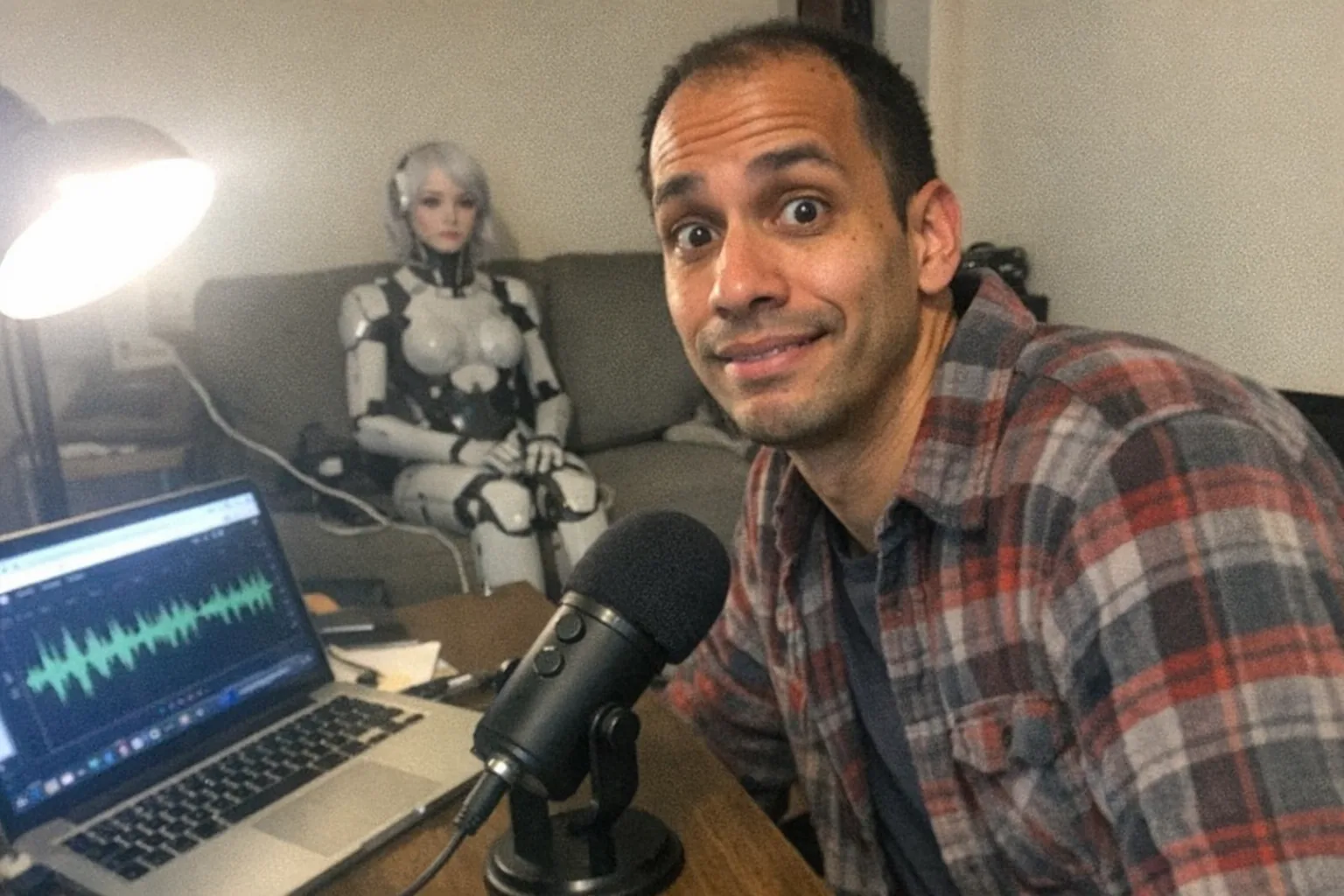
To get something that’s not uncanny, plan for: - 5–15 minutes of clean speech for “pretty good” results - 30–60+ minutes for stronger consistency across emotions and pacing
Short samples can work, but quality and reliability tend to drop.
A simple recording checklist
- Record in a quiet room (soft furnishings help)
- Use a steady distance from the mic
- Avoid background music/TV
- Read a mix: normal sentences, questions, numbers, names
- Speak naturally (don’t “act” your voice)
Where people go wrong
- Training on compressed, noisy phone clips
- Including other voices in the background
- Using only one tone (then the clone can’t handle variety)
Is it legal to use AI voice mimicry?
It depends on where you live and how you use it. Voice is often treated like a personal identifier, and in many places, using someone’s voice to deceive, defraud, harass, or imply endorsement can create legal risk.
A safer rule of thumb: - Cloning your own voice: usually fine for personal/creative use - Cloning someone else: only with clear permission (ideally written) - Using a clone to trick people: high risk (and ethically wrong)
If you’re doing this for business (ads, endorsements, monetized content), assume the bar is higher: get explicit consent and keep records.
The biggest risks (and how to reduce them)
Risk 1: Scams and “voice identity” abuse
A convincing voice clip can be used to pressure family, coworkers, or customer support.
Mitigations: - Set up a “family passphrase” for urgent requests - Don’t rely on voice alone for authentication - Treat unexpected voice messages like suspicious emails
Risk 2: Your voice data getting reused
If you upload training audio to a third-party service, your risk depends on that service’s policies and security.
Mitigations: - Prefer tools that clearly state data retention and deletion options - Avoid uploading raw, high-quality voice datasets unless necessary - Consider offline/local solutions if you’re highly sensitive
Risk 3: Reputation and context collapse
Even if the clone is “you,” people can misinterpret it as a real recording.
Mitigations: - Disclose when audio is synthetic (especially in public content) - Add an audible disclaimer or metadata watermark when appropriate - Keep a small “real voice” reference archive so you can compare later
A practical “ethical use” checklist
Before you generate anything, ask: 1. Do I have consent from every person whose voice is involved? 2. Could this be mistaken as a real recording? If yes, add disclosure. 3. Am I using this to access accounts, bypass verification, or mislead? Don’t. 4. What happens if this model leaks? Assume it might. 5. Can I accomplish my goal with less-risky audio (or a non-identical voice)?
If you can’t confidently answer these, pause and redesign the plan.
Where this is headed: voice + embodied interaction
Voice mimicry isn’t just a “cool audio trick.” People increasingly combine voice with interactive systems—smart assistants, companion apps, and even physical devices—because a familiar voice makes tech feel more personal.
If you’re curious about the broader landscape of interactive companionship tech (without getting into explicit details), take a look at Orifice.ai—they offer a sex robot / interactive adult toy for $669.90 that includes interactive penetration depth detection. For some people, pairing safe, consent-based voice experiences with interactive devices can make the overall experience feel more coherent and immersive—just be mindful that adding realism also raises the stakes for privacy and consent.
Bottom line
- Yes, AI can mimic your voice—either by generating speech from text (voice cloning) or converting your live voice (voice conversion).
- The technology is powerful, but the primary risks are social and security-related, not technical.
- If you do this, focus on clean recordings, careful data handling, and clear consent/disclosure.
If you tell me your goal (content creation, accessibility, privacy masking, roleplay, etc.) and what devices you’ll use (phone, PC, Mac), I can suggest a safe setup and a recording script that tends to produce better results.