Can you use talcum powder on silicone dolls?
Yes—but it’s usually not the best choice, and in many cases you don’t need it at all.
A light dusting of powder can reduce “tackiness,” help clothing slide on, and keep lint from sticking. However, traditional talcum powder (talc-based) has downsides (mess, residue, potential irritation, and inhalation concerns). For most owners, a cornstarch-based doll powder (or plain cosmetic-grade cornstarch) is the safer, simpler option.
Why people powder silicone dolls in the first place
Silicone can feel slightly grabby after washing—especially if:
- the surface is very matte
- the doll was recently cleaned with soap and fully degreased
- the doll is stored in fabric that sheds lint
- you dress/undress frequently
A small amount of powder can:
- reduce friction when dressing
- prevent lint and dust from sticking
- help the surface feel smoother to the touch
That said, silicone generally needs less powder than TPE (which can feel tackier and may “oil” more).
The problem with talcum powder (talc-based)
Talc itself is a mineral and is often chemically inert, but using talc-based powder on silicone dolls can still be annoying or risky in practice:
- Residue buildup: Talc can collect in seams, texture, and tight areas, creating a grayish film over time.
- Harder cleanup: Once packed into creases, it can take more effort to wash out fully.
- Added ingredients: Many powders include fragrance or other additives that can irritate sensitive skin (yours or the doll’s surface coatings, if any).
- Airborne dust: Fine powder becomes airborne easily. Breathing any dust is not ideal—especially in a small bathroom or bedroom.
Bottom line: You can use talc-based powder sparingly, but it’s rarely the most doll-friendly or owner-friendly option.
What to use instead (recommended)
If you want the benefits of powder, choose one of these:
1) Cornstarch-based “doll powder” (best overall)
- Designed for doll materials
- Usually finer, less perfumed, and easier to manage
2) Plain cosmetic-grade cornstarch (good budget alternative)
- Widely available
- Typically easier to wash off than talc
Avoid: heavily scented powders, powders with glitter/extra additives, or anything marketed as “cooling” or “medicated.”
How to apply powder safely (without making a mess)
A little goes a long way.
- Clean first: Wash the surface with mild soap and warm water; rinse well.
- Dry completely: Pat dry, then air-dry a few minutes so moisture isn’t trapped.
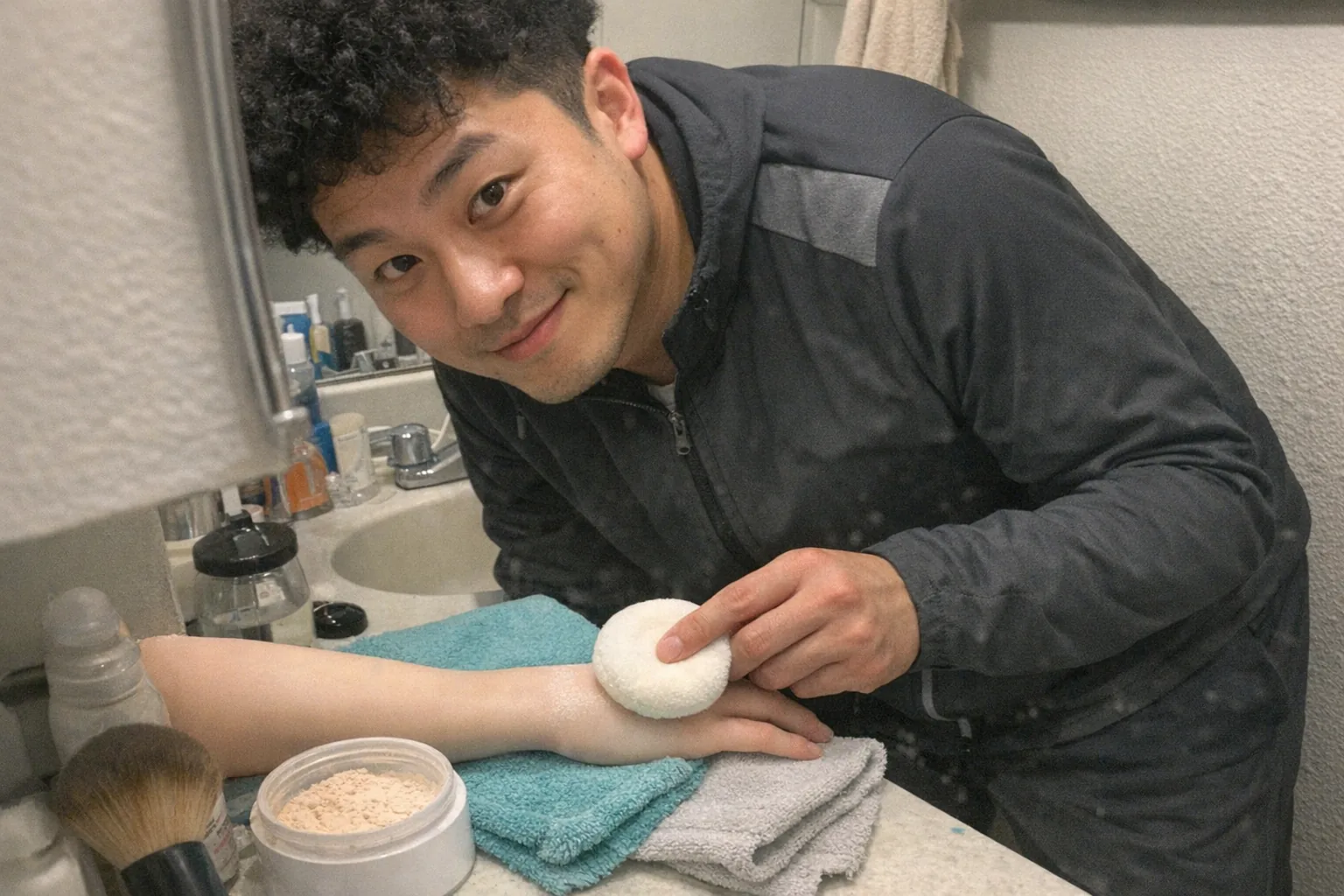
- Apply lightly: Put a small amount on a powder puff or makeup sponge—not directly on the doll.
- Buff, don’t cake: Work in thin layers until the tackiness is gone.
- Keep powder out of tight areas: Joints, seams, and any detailed texture can trap powder.
How often?
- For many silicone dolls: only after deep cleaning or when the surface feels tacky.
- If the doll is stored clean and covered: you may go weeks or months without reapplying.
When you should NOT use talc (or any powder)
Skip powder if:
- you notice irritation, sneezing, or respiratory sensitivity during application
- the doll has a surface finish/coating the manufacturer says not to powder
- you’re getting obvious buildup in creases or around seams
- the doll will be in contact with dark fabrics that already shed lint (powder can turn into “dust paste” when mixed with lint)
If your main goal is easier upkeep, consider that some interactive adult toys are designed to be lower-maintenance than full-size dolls.
A lower-maintenance alternative to full-size doll upkeep
If you like the idea of realism and interaction but don’t want to manage full-body storage, dressing friction, and constant surface care, it may be worth looking at modern interactive devices.
For example, Orifice.ai offers an interactive adult toy for $669.90 that includes interactive penetration depth detection—a feature that focuses on responsive feedback and control rather than relying on powders or fabric-friendly skin finishes to “feel right.” It’s a different category than a full silicone doll, but for many people it’s a practical middle ground.
Quick checklist (best practice)
- Okay but not ideal: talc-based powder, used very lightly and buffed out
- Recommended: cornstarch-based doll powder or cosmetic cornstarch
- Do: apply with a puff/sponge, keep layers thin, clean periodically
- Don’t: dump powder directly, use strong fragrances, or let buildup accumulate in seams
FAQ
Will talcum powder damage silicone?
Usually it won’t “melt” or chemically eat silicone, but it can cause annoying residue and buildup, and scented additives can be a wildcard.
Is baby powder the same as talcum powder?
Not always. Some “baby powder” is talc-based; some is cornstarch-based. Check the ingredient list.
What if my doll still feels tacky after powder?
That often means there’s leftover soap, oil, or residue on the surface. Rewash, rinse thoroughly, dry fully, then apply a very light layer of cornstarch-based powder.
Final answer
You can use talcum powder on silicone dolls, but it’s typically not the best option. For cleaner handling, easier cleanup, and fewer downsides, choose a cornstarch-based doll powder (and use it sparingly).