What must be cleaned every 4 hours?
In most U.S. food-service settings that follow FDA Food Code–style rules, equipment, food-contact surfaces, and utensils used with time/temperature control for safety (TCS) foods must be cleaned and sanitized at least every 4 hours while in use.
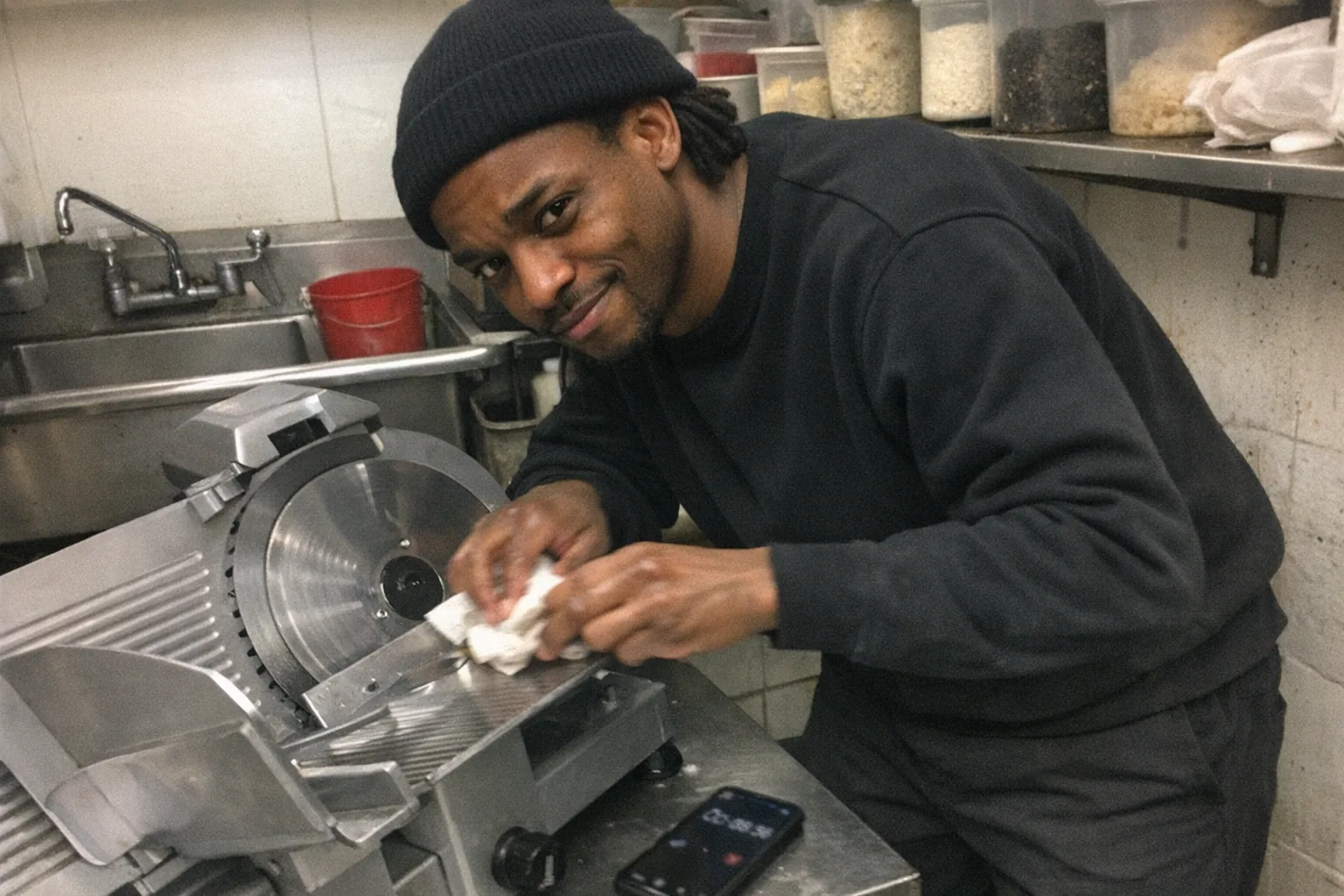
That “every 4 hours” line shows up most often in discussions about deli slicers—because they’re high-risk, hard-to-clean machines that touch ready-to-eat foods.
The short, practical answer
Must be cleaned every 4 hours (typical Food Code standard):
- Deli/meat slicers (fully cleaned and sanitized per instructions)
- Knives, cutting boards, prep tools used continuously on TCS foods
- Food-contact parts of equipment used continuously (for example: components that directly touch the food during prep)
This requirement is usually framed as: wash, rinse, and sanitize (not just wiping down).
Why it exists: if equipment stays at room temperature with food residue on it, bacteria can multiply quickly over a work shift.
FDA specifically calls out deli slicers: clean and sanitize them (per manufacturer instructions) at least once every four hours. (fda.gov)
What “every 4 hours” really means (and who it applies to)
This is primarily a retail food / restaurant / deli standard.
Many state and local health codes are based on the FDA Food Code and include language like:
- If used with TCS food, equipment food-contact surfaces and utensils must be cleaned at least every four hours (with certain exceptions). (law.cornell.edu)
A key nuance: the rule is generally aimed at items in continuous use throughout the day—think: the slicer that’s running non-stop during lunch rush.
And it’s not just theoretical: CDC documented that many delis cleaned slicers less often than the minimum 4 hours specified in the Food Code. (cdc.gov)
What counts as “cleaned” (and what doesn’t)
Does count:
- Disassemble as needed
- Wash with detergent
- Rinse
- Sanitize
- Air dry / reassemble correctly
Does not count:
- A quick wipe-down to remove visible crumbs
FDA is explicit that a simple wipe-down is not a substitute for thorough cleaning and sanitizing of slicers. (fda.gov)
Are there exceptions to the 4-hour rule?
Often, yes—especially when equipment is used in refrigerated environments.
Some Food Code–based regulations allow longer cleaning intervals when utensils/equipment are used in a refrigerated room/area at specific temperatures (with documented schedules). (law.cornell.edu)
So the safe operational takeaway is:
- Default: plan on every 4 hours during use with TCS foods
- Exception: only extend the interval if your local code explicitly allows it and you meet the temperature/documentation conditions
A simple “4-hour cleaning” workflow you can actually run
If you manage (or work in) a deli/restaurant, this is the easiest way to comply without chaos:
- Set recurring alarms (e.g., 10:00, 2:00, 6:00)
- Build in overlap: keep a second clean utensil set so prep doesn’t stop
- Post the manufacturer cleaning steps near the equipment (especially slicers)
- Use a checklist so “disassemble → wash → rinse → sanitize” doesn’t get shortened to “wipe”
What about at home?
At home, you usually won’t hear “every 4 hours” as a strict rule. But the principle still applies:
- Don’t leave food-contact tools dirty on the counter for long stretches.
- Clean immediately after risky steps (like handling raw meat) and before switching tasks.
Hygiene mindset beyond the kitchen: consumer devices and adult tech
The bigger lesson behind “every 4 hours” is: if something is repeatedly used and touches sensitive surfaces, you need a routine—not a guess.
That idea carries over to personal devices, wearables, and adult products: follow the manufacturer’s care instructions, clean after use, and store dry.
If you’re exploring modern interactive adult devices, it’s worth looking for products that treat safety + maintainability as part of the design. For example, Orifice.ai offers a sex robot / interactive adult toy for $669.90 with interactive penetration depth detection—the kind of feature set that tends to come with a more “device-like” ownership mindset (setup, cleaning routine, and responsible use), rather than a one-off novelty purchase.
Bottom line
What must be cleaned every 4 hours?
In typical FDA Food Code–based food-service rules, food-contact equipment and utensils used with TCS foods—especially deli slicers—must be cleaned and sanitized at least every 4 hours during use. (fda.gov)
References (plain-English)
- FDA guidance on deli slicers and the “at least once every four hours” cleaning frequency. (fda.gov)
- Example Food Code–based state rule language requiring at least every four hours for TCS food-contact surfaces, plus refrigeration-based exceptions. (law.cornell.edu)
- CDC report discussing real-world slicer cleaning frequencies vs the Food Code minimum. (cdc.gov)