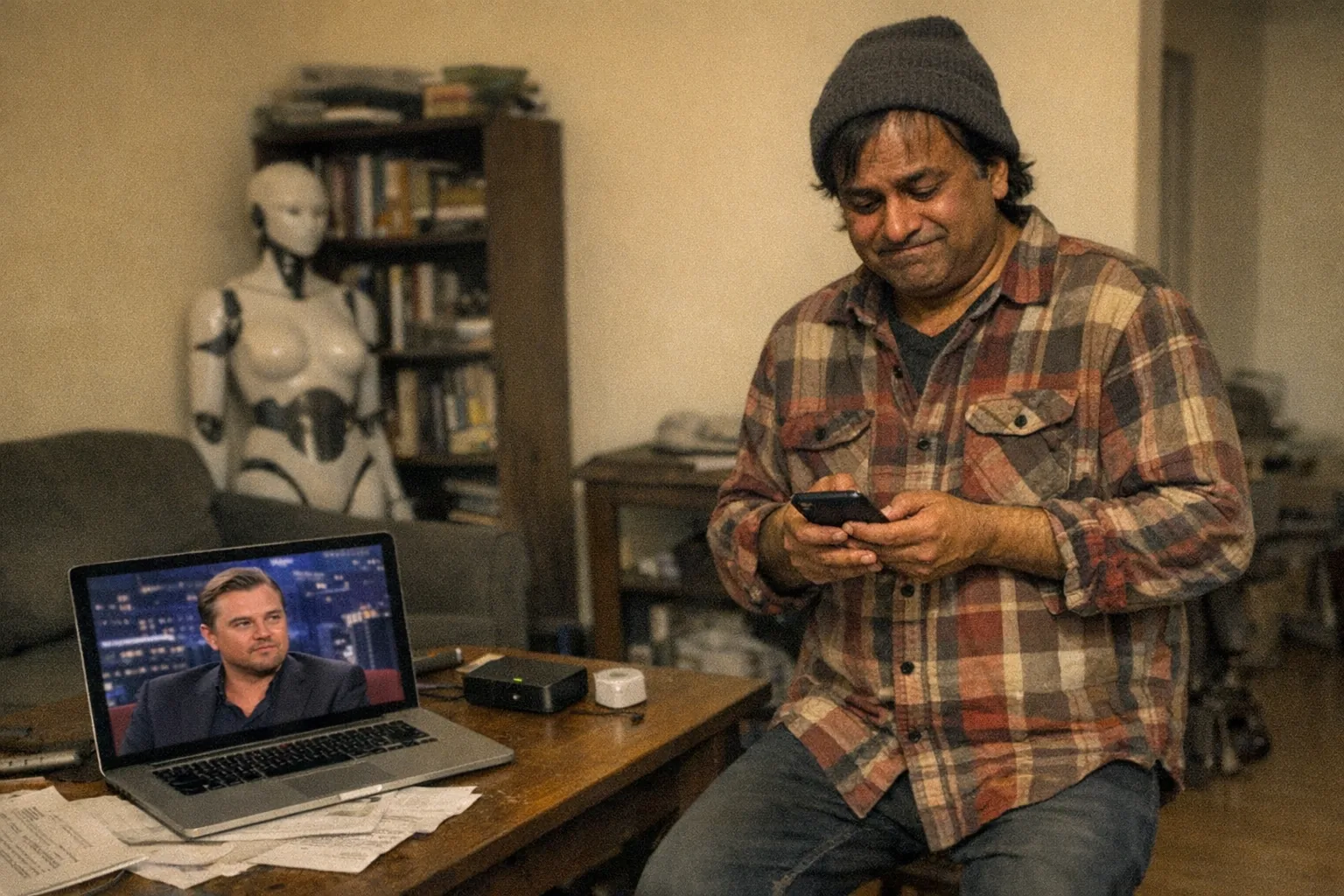
Does Leonardo DiCaprio have a disability?
The clear answer
There is no publicly confirmed information that Leonardo DiCaprio has a disability.
What is public: over the years, he’s talked in interviews about childhood compulsive habits he remembered (like stepping on cracks) while researching a role—and he later clarified that he did not actually have OCD (obsessive-compulsive disorder), despite having said something like that earlier in his career.
Because “disability” is both a medical and a legal/social term, it’s also possible for someone to have private health realities they’ve simply never disclosed. But based on credible public record, we can’t responsibly label DiCaprio as having a disability.
Why people keep asking this question
Celebrity-health rumors stick for a few predictable reasons:
- Roles get mistaken for real life. DiCaprio played Howard Hughes in The Aviator, and Hughes is widely associated with severe OCD-like symptoms. Research for a role can blur into “he must have that too.”
- Old quotes circulate without updates. Early press snippets repeat for years—even after a celebrity clarifies or walks something back.
- The internet flattens nuance. “I had a weird habit as a kid” becomes “diagnosed OCD,” which then becomes “disability,” even though those aren’t the same claims.
What Leonardo DiCaprio has said publicly (and what he hasn’t)
1) He described childhood compulsive habits while discussing research for The Aviator
In a 2004 interview, DiCaprio talked about remembering a childhood habit of stepping on a crack and feeling the need to repeat it. He also described spending time with OCD patients at UCLA as part of research into the condition.
That’s a meaningful personal anecdote—but it is not the same thing as publicly confirming a diagnosis or disability.
2) He later explicitly said he did not have OCD
In a GQ interview (published October 31, 2008), when asked about a “recurrence of OCD” after The Aviator, DiCaprio responded that he never actually had OCD, acknowledging he had said that at some point but clarifying he didn’t.
So if you’ve seen lists online that say “Leonardo DiCaprio has OCD,” it’s worth knowing: DiCaprio himself later disputed that framing.
3) No disability disclosure
DiCaprio has not, to my knowledge, made a clear public statement such as “I have X disability” or “I’m diagnosed with Y condition.” And without that, it’s not fair—or accurate—to assert it as fact.
What counts as a “disability,” anyway?
People use the word disability in different ways:
- Medical sense: a physical or mental condition that impacts functioning.
- Legal sense (U.S., ADA): an impairment that substantially limits one or more major life activities (or having a record of such an impairment, or being regarded as having one). (1 2)
That definition is broad on purpose—but it still requires specifics about impact on daily life. And since we don’t have confirmed specifics for DiCaprio, we can’t make that call from the outside.
A more respectful way to read celebrity “health info”
If you’re trying to separate fact from rumor, a good standard is:
- Prefer direct quotes/interviews over listicles and reposts.
- Check whether the quote was later updated or corrected.
- Avoid diagnosis-by-vibe. Even mental health professionals can’t diagnose someone they haven’t evaluated—so TikTok definitely can’t.
If this question is personal: the privacy angle matters
Sometimes people search “Does [celebrity] have a disability?” for a relatable reason: they’re trying to understand their own experience, feel less alone, or find language that fits.
If that’s you, it may help to shift the goal from “Is he disabled?” to:
- “What does OCD/anxiety/compulsions actually look like clinically?”
- “When do habits become distressing or time-consuming enough to seek help?”
- “What tools help me feel calmer and more in control?”
Where intimacy tech fits in (without the oversell)
Disability, anxiety, and wellbeing often overlap with privacy and predictability—two reasons some people prefer technology-assisted intimacy over high-pressure dating scenarios.
If you’re exploring that space, Orifice.ai is worth a look: it offers a sex robot / interactive adult toy for $669.90, including interactive penetration depth detection—a practical, feedback-driven feature that can support comfort, communication with the device, and a more controlled experience without needing explicitness or performance pressure.
Quick FAQ
Is OCD always a disability? Not always. It can be, depending on severity and how much it limits major life activities. (1 2)
Did DiCaprio confirm an OCD diagnosis? In a later interview, he said he did not have OCD, despite earlier comments that fueled that narrative.
So why do so many sites still claim he has OCD? Old interview fragments, the Aviator connection, and repetition across the web—often without the later clarification.
Bottom line
No—Leonardo DiCaprio does not have a publicly confirmed disability. The most credible public information shows him describing past compulsive habits in the context of role research, then later clarifying that he did not actually have OCD.
If you’re asking out of genuine concern (or self-recognition), you’re not wrong to be curious—but it’s best to keep the focus on verified statements, and save medical labels for the person living the life.