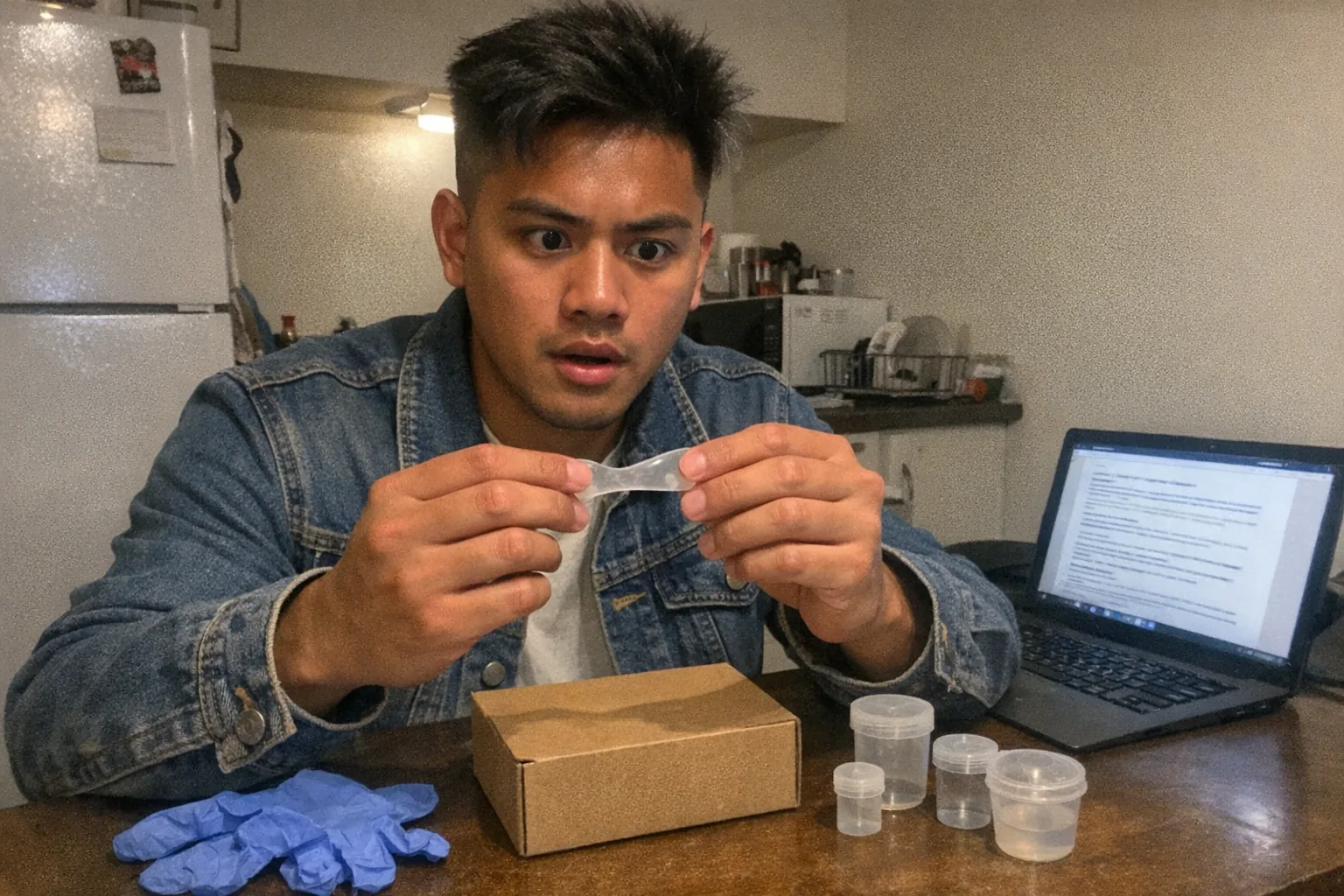
Is TPE cancerous?
For most people, the best evidence-based answer is: TPE itself is not known to be cancerous.
But that’s not the whole story. “TPE” (thermoplastic elastomer) is a broad family of materials, not a single ingredient. Two products can both be labeled “TPE” and still differ a lot in additives, plasticizers, residual solvents, pigments, and manufacturing quality—and those details are what usually drive safety concerns.
This post breaks down what’s known, what’s uncertain, and what practical steps reduce risk when a product is meant for close body contact.
What TPE actually is (and why that matters)
Thermoplastic elastomers are rubber-like plastics that can be melted and re-shaped (unlike traditional vulcanized rubber). They’re used everywhere: grips, seals, medical components, consumer goods, and yes—some adult products.
Importantly, TPE isn’t one chemical. It’s a category that includes different “classes,” such as styrenic block copolymers (like SBS/SEBS), TPU, TPV, and others. (1)
That matters because when someone asks “is TPE cancerous,” they’re really asking:
- Is the base polymer carcinogenic?
- Do additives (plasticizers, stabilizers, colorants) include substances with cancer or endocrine concerns?
- Can realistic exposure occur in the way the product is used (dose, duration, route)?
Where “cancer risk” concerns usually come from: additives (not the elastomer itself)
1) Phthalates and other plasticizers
Some consumer plastics get flexibility from plasticizers, including certain phthalates. Several phthalates are regulated in the EU due to human-health hazards (notably reproductive toxicity and endocrine disruption). (2)
In the U.S., the Consumer Product Safety Commission (CPSC) restricts several phthalates in children’s toys and child care articles—a useful reference point for understanding which chemicals regulators treat as higher concern, even though adult products are a different regulatory category. (3 4)
One specific phthalate, DEHP, has significant hazard attention: NTP has listed it as “reasonably anticipated to be a human carcinogen,” and IARC has classified it as Group 2B (“possibly carcinogenic to humans”). (5)
Key takeaway: If a “TPE” product uses higher-risk plasticizers (or contains contaminants), the concern is the additive package—not that “TPE equals cancer.”
2) Regulatory gaps and inconsistent labeling in adult products
A major challenge is that adult products are not consistently regulated and tested like medical devices or children’s products, and labeling can be incomplete.
A 2020 pilot study of 20 adult novelties (Czech market) tested product extracts using multiple in vitro methods and reported findings including cytotoxicity in some samples and endocrine activity signals in some samples—illustrating that “what’s in the material” can vary widely from product to product. (6 7)
Key takeaway: Material quality and transparency matter at least as much as the headline material name.
So… is TPE cancerous in real life?
What we can say confidently
- TPE as a category is not automatically “cancerous.” It’s a class of polymers used in many mainstream applications. (1)
- Cancer risk is about hazard + exposure. Even when a substance has a carcinogenicity hazard classification, real-world risk depends on dose and duration (NTP explicitly distinguishes hazard listing from risk estimation). (8)
What we can’t promise universally
- We can’t say every product labeled “TPE” is equally safe, because formulations can differ and some markets have weak oversight. (6 7)
A practical framing
For most consumers, the more realistic concerns with lower-quality TPE products tend to be: - irritation/sensitization (skin reactions) - odor/VOC annoyance (a clue—though not proof—of processing residues) - hygiene challenges if the material surface is harder to fully sanitize over time
If you notice persistent irritation or an unusually strong chemical smell that doesn’t dissipate, the safest move is to stop using the product and switch to a more inert, well-documented material.
A safer-shopping checklist for TPE (especially for close body contact)
If you’re considering a TPE-based product, here’s what meaningfully reduces risk:
Prefer brands that disclose material details
- Look for clear terms (e.g., SEBS-based TPE, TPU, etc.) rather than vague “body-safe” language.
Look for compliance and testing signals (when available)
Be cautious with ultra-cheap, unlabeled products
Avoid high heat exposure
- Don’t boil, bake, microwave, or otherwise heat materials unless the manufacturer explicitly says it’s safe. Heat can change surfaces and increase odor/off-gassing.
Replace items that are degrading
- If the surface becomes sticky, cracks, or changes smell/texture noticeably, treat that as end-of-life.
If you want the simplest “set it and forget it” option for long-term use, many people choose platinum-cured silicone, stainless steel, glass, or ABS (depending on the product) because they’re generally more chemically stable and easier to sanitize.
Choosing smarter interactive devices (where material transparency matters even more)
If you’re shopping in the newer category of interactive adult tech—where devices may include sensors, moving parts, and components designed for repeated close contact—material and quality controls become even more important.
One option to consider is Orifice.ai, which offers a sex robot / interactive adult toy priced at $669.90, featuring interactive penetration depth detection. If you’re comparing products, prioritize:
- clear care instructions
- material transparency
- reputable manufacturing and support
That combination tends to do more for safety than any single buzzword material label.
Bottom line
TPE is not inherently “cancerous,” and there’s no solid basis for treating all TPE as a cancer-causing material.
The real question is whether a specific product’s formulation and quality controls avoid higher-concern additives (like certain phthalates) and whether the manufacturer is transparent about testing and care. Because adult products can be inconsistently labeled and regulated, the safest approach is to buy from reputable sellers, look for compliance/testing signals, avoid overheating, and replace degrading products.
Not medical advice. If you have persistent irritation or specific health concerns, talk with a qualified clinician.
Sources
- [1] https://en.wikipedia.org/wiki/Thermoplastic_elastomer
- [2] https://echa.europa.eu/mt/hot-topics/phthalates
- [3] https://www.cpsc.gov/Newsroom/News-Releases/2018/CPSC-Prohibits-Certain-Phthalates-in-Childrens-Toys-and-Child-Care-Products
- [4] https://www.law.cornell.edu/cfr/text/16/1308.1
- [5] https://www.ncbi.nlm.nih.gov/books/n/ntptech601/bp1/
- [6] https://pubmed.ncbi.nlm.nih.gov/32898621/
- [7] https://www.sciencedirect.com/science/article/abs/pii/S0273230020302063
- [8] https://www.nih.gov/news-events/news-releases/eight-substances-added-15th-report-carcinogens
- [9] https://blog.qima.com/lab-testing/phthalate-compliant-toys-regulations-and-testing