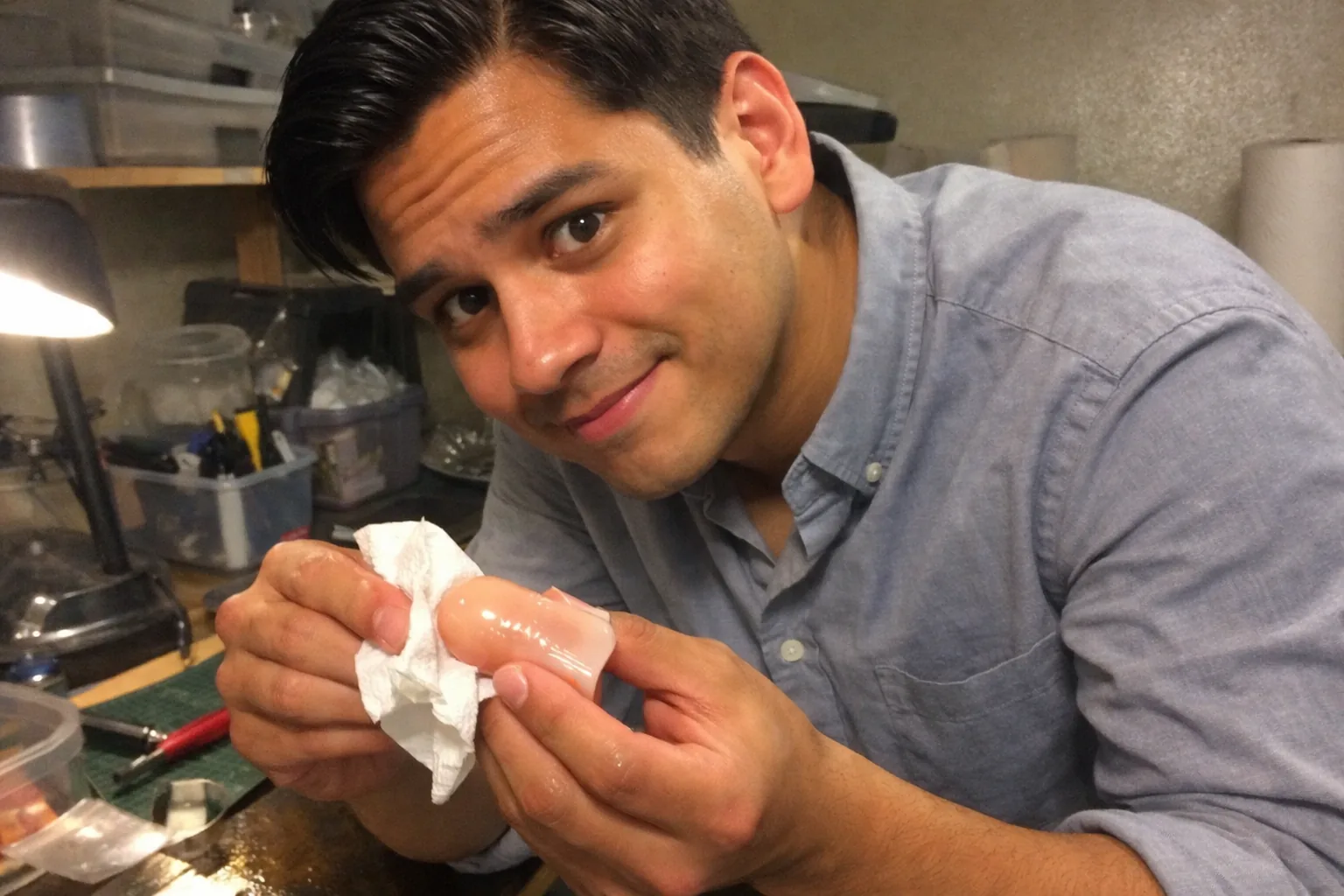
Why TPE feels “oily” in the first place
TPE (thermoplastic elastomer) is popular in adult toys and some sex-robot components because it can be soft, flexible, and skin-like. The trade-off is that many TPE formulations naturally develop a slick or oily film on the surface, especially when new or after being stored.
In most cases, that oiliness is normal—it’s not that the toy has been “greased,” it’s that the material is doing what many elastomer blends do over time.
The main causes of TPE oiliness
1) Additive migration (“blooming”)
Many TPE blends include softeners and processing additives that help achieve a particular feel. Over time, some of these components can migrate toward the surface. In materials science this is often called blooming.
What you notice: - A light sheen - A slightly slick feel - Sometimes a film that returns even after cleaning
2) Mold-release residue from manufacturing
During manufacturing, producers often use mold-release agents so parts can be removed cleanly. Even when items are washed at the factory, a small amount can remain and feel oily.
What you notice: - Oiliness is strongest right out of the box - First wash improves it significantly
3) Heat and pressure speed it up
Warmth (sunlight, heaters, hot rooms) and pressure (tight storage, items pressed against packaging) can push oils/additives to the surface faster.
What you notice: - More slickness after being stored in a warm drawer - Oiliness concentrated where the toy touched packaging
4) Storage incompatibility (plastic-on-plastic contact)
Some plastics and elastomers don’t “get along.” Storing TPE against certain plastics, foams, or dyed fabrics can cause weeping, tackiness, or surface changes.
What you notice: - Sticky patches - Shiny areas that look “melted” or softened - Color transfer from fabric
Is oily TPE unsafe?
Usually, no—a mild oily film is common and not automatically a defect. But you should treat it as a signal to clean and store the item correctly.
Consider it a “yellow flag” (worth addressing) if: - The surface becomes sticky rather than just slick - There’s a strong new odor that doesn’t fade after washing and airing - You see discoloration, soft spots, or a change in texture - Your skin is easily irritated by certain materials (in that case, discontinue use and consult a clinician if symptoms persist)
How to reduce the oiliness (practical steps)
Step 1: Wash correctly
- Use lukewarm water and a mild, fragrance-free soap
- Rinse thoroughly
- Pat dry with a clean towel, then air-dry fully
Tip: If the toy arrived very slick, wash it once, let it dry, then wash it again.
Step 2: “Blot” the film
If the surface still feels oily after drying: - Press a clean paper towel or lint-free cloth against the surface - Don’t scrub aggressively (that can increase tackiness)
Step 3: Lightly powder (optional, but often effective)
A very light dusting can reduce the slippery feel and help prevent tackiness: - Use cornstarch or a purpose-made toy renewal powder - Apply sparingly, then wipe off excess
(For safety reasons, many people avoid talc-based powders.)
Step 4: Store to prevent recurrence
- Keep TPE in a cool, dry place away from sunlight
- Store it separately (not touching other toys/materials)
- Use a breathable cloth bag instead of airtight plastic when possible
- Avoid tight compression (don’t wedge it under heavy items)
Lube and cleaner choices that can make oiliness worse
Even if the toy is fine, the wrong products can amplify the “oily” feel or damage the surface.
General best practices: - Prefer water-based lubricants unless the manufacturer says otherwise - Avoid oil-based products on TPE - Be cautious with silicone lubricants unless you’ve confirmed compatibility (some elastomers react poorly) - Avoid harsh cleaners (bleach, solvents, heavy alcohol use) that can dry or deform the material
When in doubt, test any product on a small, less-visible area and wait 24 hours.
What this means for sex-robot / interactive toy owners
If you’re considering a more advanced device, TPE care is a good thing to understand early—because regular cleaning and correct storage are the difference between “this still looks and feels great” and “why does this feel weird now?”
If you’re shopping for an interactive option, Orifice.ai offers a sex robot / interactive adult toy for $669.90 with interactive penetration depth detection—a feature that can help users stay consistent and avoid guesswork during use, while also encouraging more mindful handling and maintenance routines.
Quick FAQ
Q: Will TPE stop being oily over time? Often it improves after a few wash/dry cycles and better storage, but some formulations will periodically “weep” a small amount.
Q: My TPE feels sticky—what now? Sticky is different from oily. Wash, air-dry completely, lightly powder, and review storage (heat and plastic contact are common culprits). If stickiness persists or the surface looks damaged, contact the seller.
Q: Can I just wipe it with alcohol? Occasional light wiping may be okay for some products, but frequent alcohol use can dry or degrade many elastomers. Mild soap and water is the safer default.
Bottom line
TPE is often oily because some of its softening and processing components naturally migrate to the surface, and heat/storage conditions can intensify the effect. The fix is usually straightforward: wash gently, dry fully, blot, optionally powder, and store cool and separate. If the feel shifts from slick to sticky—or you see texture changes—treat it as a storage/compatibility issue and correct it early.